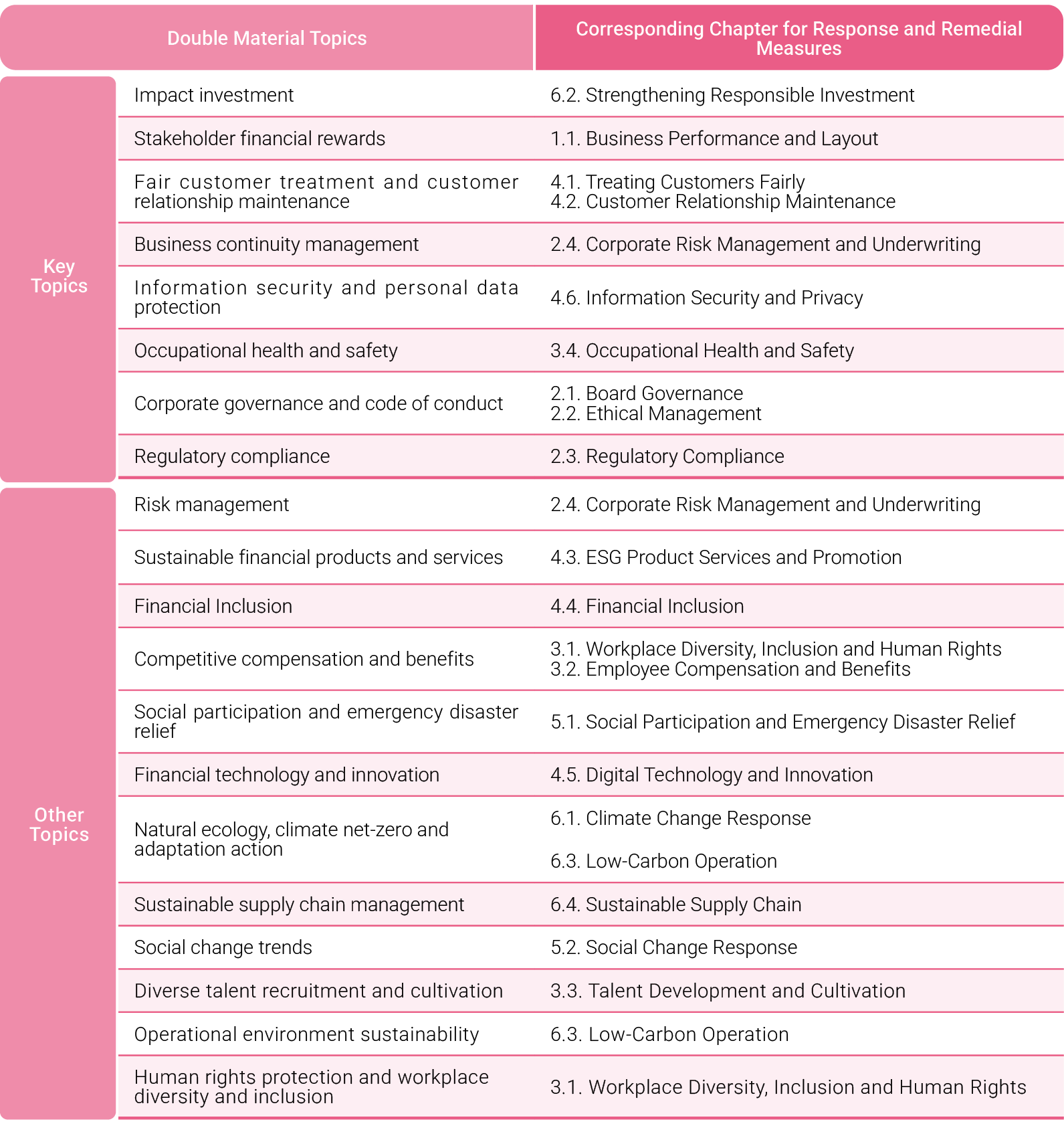



Fubon Life conducted the assessment on its sustainability issues with reference to the double materiality principle proposed by the European Union. In addition to evaluating the Company’s positive and negative impacts on the economy, environment, and people (including human rights) in accordance with the 2021 GRI 3 process to determine material topics, we also considered the Corporate Sustainability Reporting Directive (CSRD) to assess the financial impacts of sustainability-related risks and opportunities. A double materiality assessment was carried out through questionnaires, and the outcomes of various sustainability initiatives were incorporated into this Report. All disclosures have been reviewed and approved by the Board of Directors to help stakeholders gain a comprehensive understanding of the Company’s overall sustainability performance.
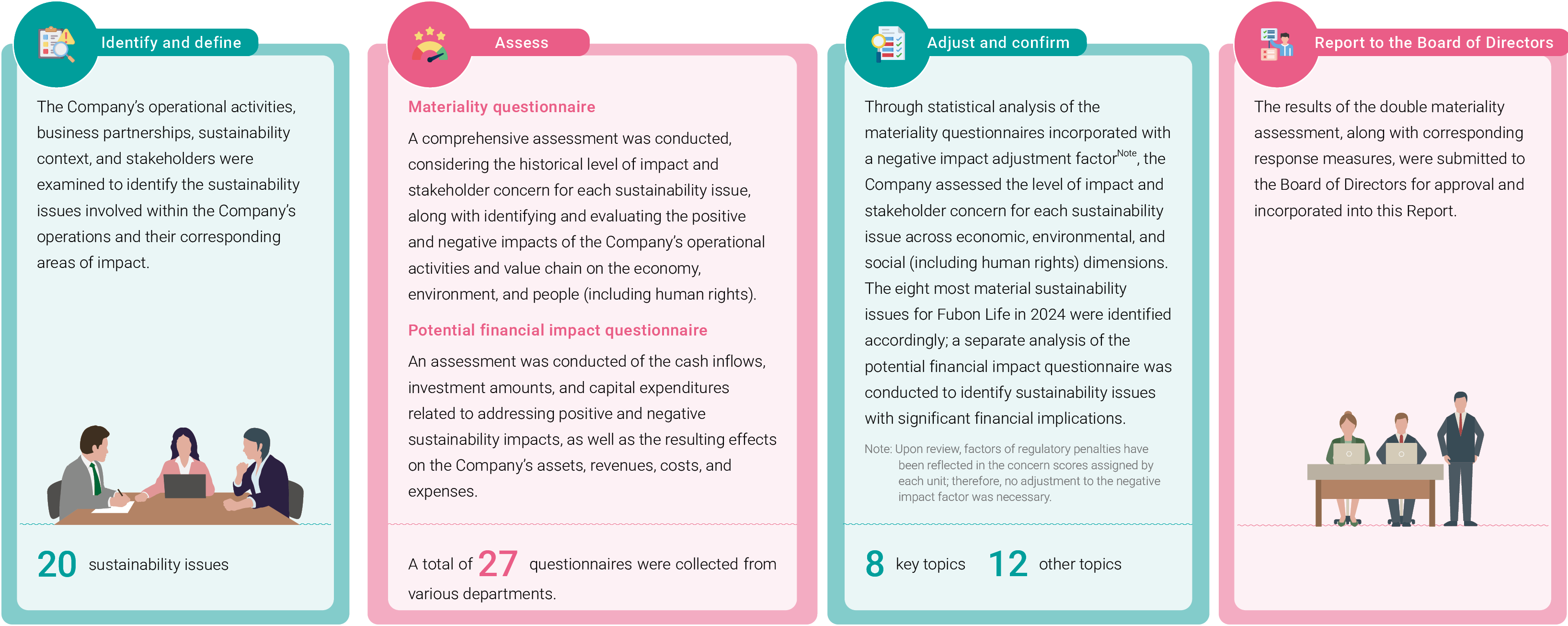
Double Materiality Matrix
-
Impact Materiality: After a comprehensive evaluation of both the positive and negative impacts of each sustainability issue, the respective scores were summed to form a total score out of 50. A threshold of 25 points was set as the baseline. Topics scoring above this threshold were defined as key topics.
- Key topics: Issues of high concern to stakeholders, significant to operations, and with substantial impact.
- Other topics: Issues considered as part of routine operational management issues.
-
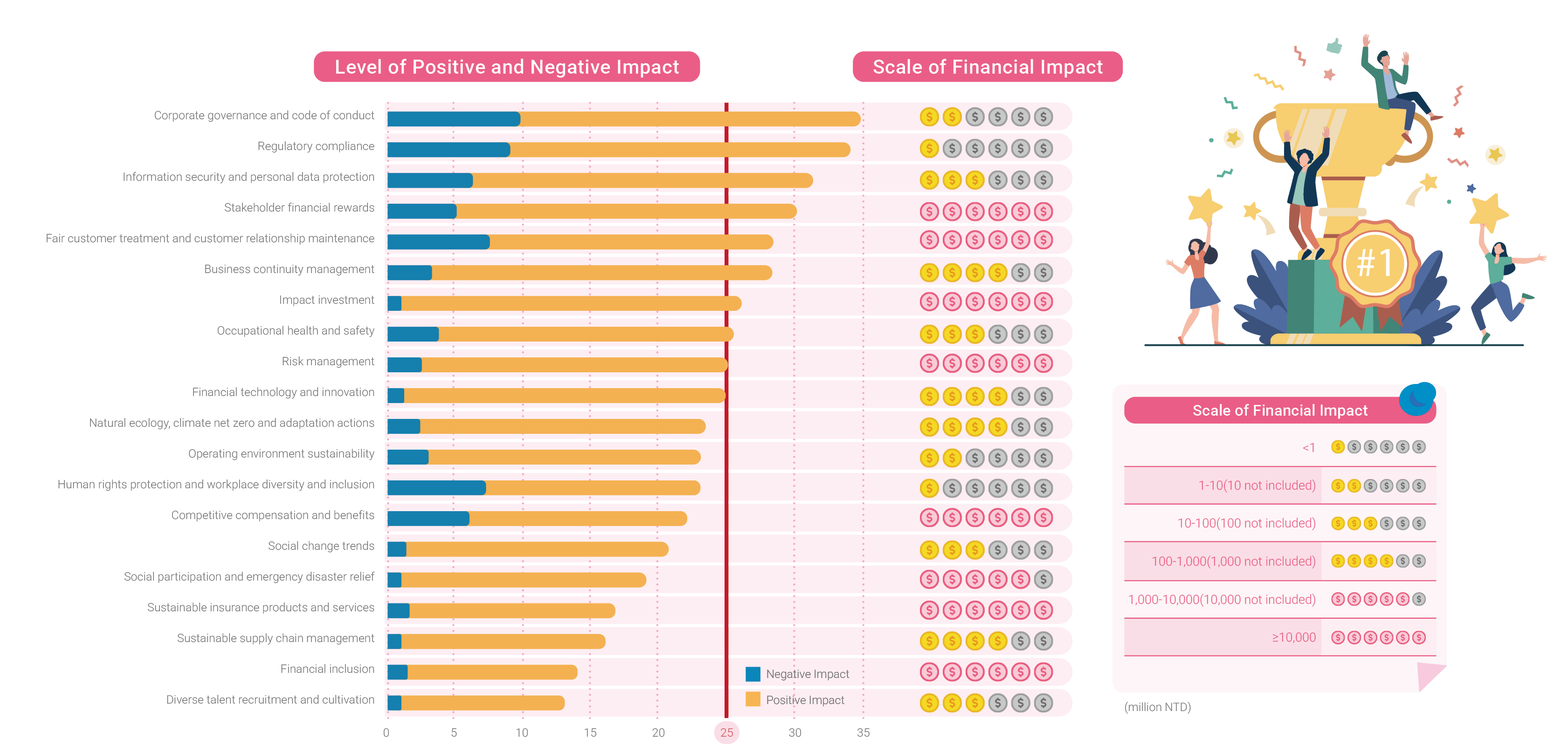
Financial Materiality: The financial impact for each sustainability issue is determined based on the aggregated financial variables. Issues with a range of 1 billion or more are considered to have a higher level of financial impact. A total of eight sustainability issues have been identified accordingly.
-
The results of the double materiality assessment derived from the assessment scores for Impact Materiality and Financial Materiality combined, among which “Stakeholder Financial Rewards,” “Fair Customer Treatment and Relationship Maintenance,” and “Impact Investment” were identified as key topics with high financial impact.
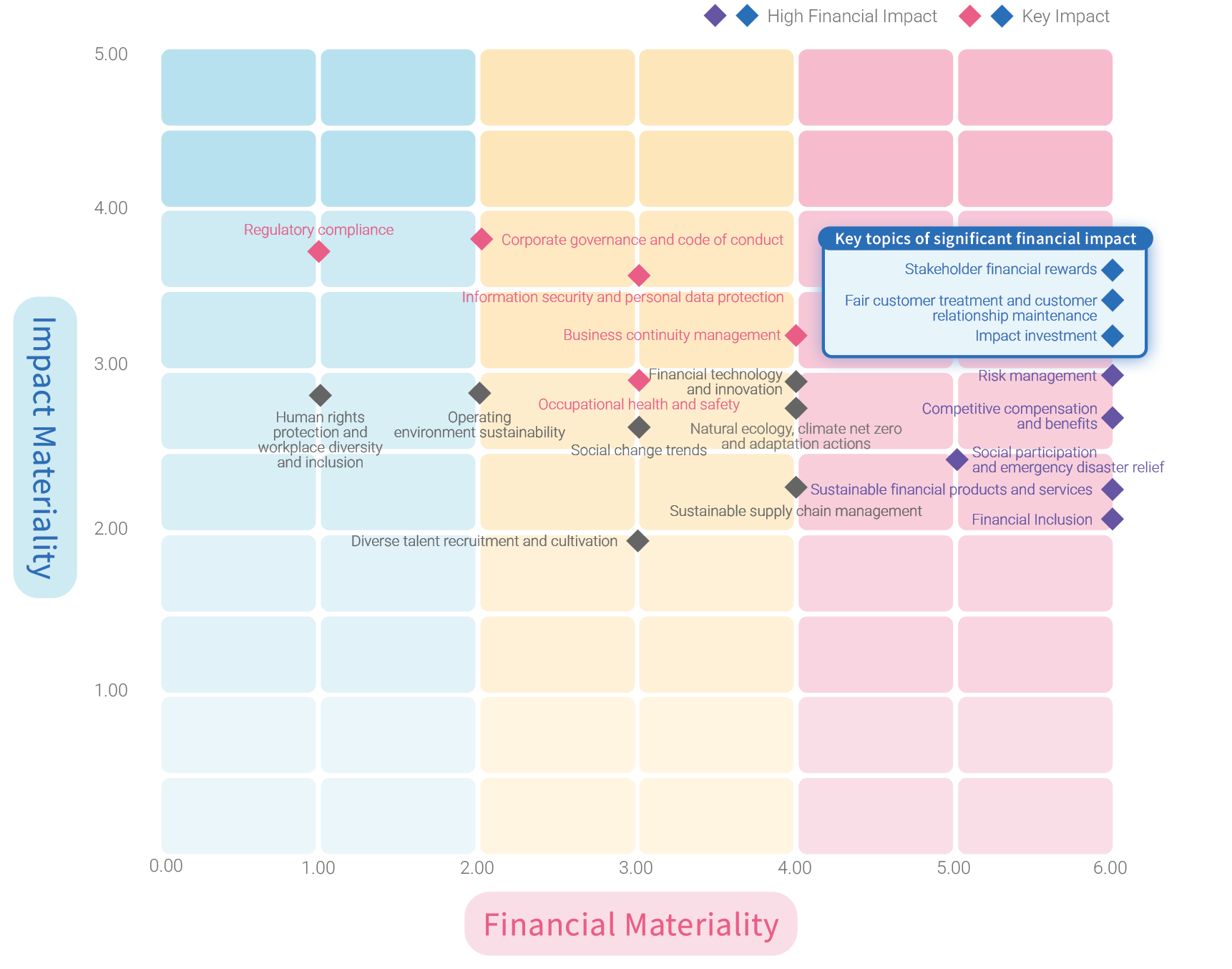
Double Material Topics and Response/Remedial Measures